Why the Toyota Fortuner Equals Pure POWER in India

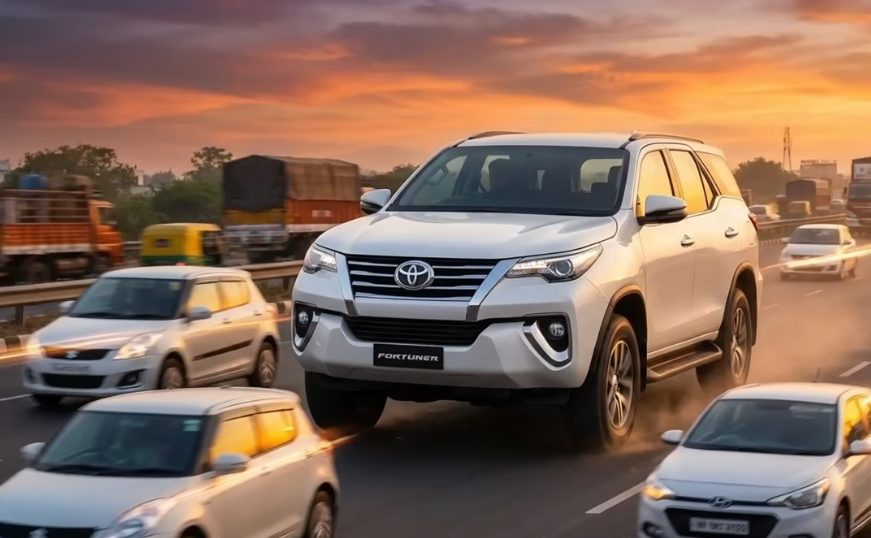
Year after year, car prices keep climbing. But if there’s one vehicle that continues to sell like hotcakes no matter how expensive it gets, there’s serious psychology at work behind it.
We’re not just talking about another full-size SUV. We’re talking about an undisputed power statement on Indian roads: the Toyota Fortuner.
When Toyota first introduced the Fortuner to India back in 2009, it was priced around ₹20 to ₹25 Lakhs. Fast forward to today, and on-road prices touch nearly ₹55 to ₹60 Lakhs for top variants like the Legender.
Now, if someone is spending ₹60 Lakhs, you’d expect plush comfort, high-tech luxury gadgets, and a floating ride. But people who sign that cheque for a Fortuner aren’t looking for soft luxury.
So, how did this Japanese workhorse become the ultimate badge of authority for Indian politicians, business magnates, and anyone who wants to command respect the moment they arrive? Let’s break it down.
1. The Foundation: Bulletproof Toyota Trust
Before the Fortuner ever landed on our shores, Toyota spent the early 2000s building one massive asset in India: unshakeable reliability.
First came the Qualis, running lakhs of kilometres without skipping a beat. That bulletproof reputation was inherited by the Innova, proving to every Indian buyer that a Toyota engine simply does not quit.
By the time the Fortuner launched in 2009, buyers didn't even need a test drive. Rivals arrived and faded away—the Mitsubishi Pajero, Chevrolet Captiva, Hyundai Santa Fe, and Honda CR-V—none could touch Toyota's sheer trust factor. People booked the Fortuner with their eyes closed because they knew the machine would outlive everything else in their garage.
2. Pure Road Intimidation
The Fortuner’s design follows one clear principle: intimidation.
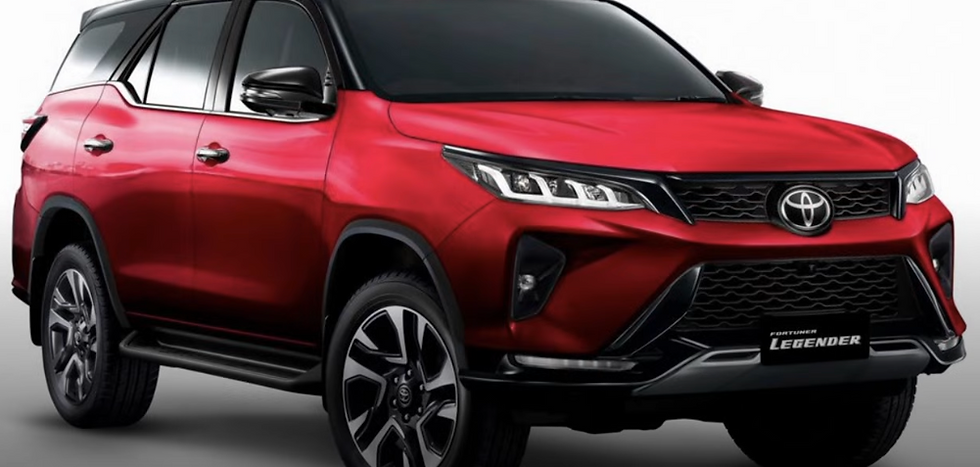
Take a look at the current generation and the aggressive Legender front fascia. That towering stance, muscular hood, massive chrome-and-black grille, and sharp piercing LED headlamps create genuine fear in your rear-view mirror.
When a Fortuner flashes its high beams behind you on a highway, you don't argue—you instinctively steer to the side and let it through. Hatchbacks, sedans, and even compact crossovers immediately clear the fast lane. That sheer road dominance feeds directly into the psychology of Indian buyers who want instant road authority.
3. Rugged, No-Nonsense Muscle
Beneath all the aggressive styling sits a classic ladder-on-frame chassis.
We all know the reality of Indian infrastructure. Potholes, sudden diversions, rough village roads, and broken tarmac are everyday obstacles. In a delicate luxury sedan, you cringe at every speed breaker. In a Fortuner, you don't even slow down.
Whether it was the older 3.0-litre D-4D diesel or today’s punchy 2.8-litre powerhouse putting out 500 Nm of torque, it delivers effortless low-end grunt. It doesn’t have the delicate, high-tech power of an Audi or BMW; it’s raw, mechanical, unapologetic muscle. It gives the driver utter confidence that no matter what terrain lies ahead, the machine will hold up.
4. The White Fortuner: India’s Modern Ambassador
There’s a very specific cultural image in India: a pristine White Fortuner.
Decades ago, the white Ambassador was the undisputed symbol of government machinery and political power. Today, the white Fortuner has taken that crown.
From local politicians and infrastructure contractors to real-estate tycoons, it is the default chariot. When a convoy of white Fortuners rolls into town, people know someone important has arrived. Picture someone stepping out in a crisp white shirt and dhoti—the Fortuner completes that power persona in a way no European crossover ever could. It has cemented itself as an undisputed cult status symbol.
5. Crazy Resale Value & Zero Competition
Let's talk about the elephant in the room: competition.
For years, the Ford Endeavour was the only SUV that gave the Fortuner a run for its money. In fact, when it came to cabin comfort, ride plushness, and advanced tech, the Endeavour was often the superior package. But once Ford exited the Indian market, the Fortuner was left standing completely unchallenged.
Then comes the magic of its depreciation—or lack thereof:
Buy a Fortuner for ₹50 Lakhs today, drive it hard for 5 years, clock over 1,00,000 kilometres on the odometer, and you can still sell it in the used market for ₹35 to ₹38 Lakhs.
Very few luxury machines hold their value like this. Knowing your capital is secure makes it an easy, risk-free investment for business owners.
The Reality Check
Let’s be dead honest: the Fortuner is not the smoothest riding SUV in the world. The ladder-frame suspension bounces over bad patches, the cabin materials feel modest for a ₹60 Lakh vehicle, and it lacks the panoramic sunroofs and ultra-posh gadgetry that rivals offer.
Do buyers care? Not one bit.
They aren't buying a luxury lounge; they are buying an aggressive, indestructible, and unapologetic power tool that announces their arrival before they even step out of the car.

Comments