The Secret of Toyota Quality: Why These Cars Last 5 Lakh Kilometres

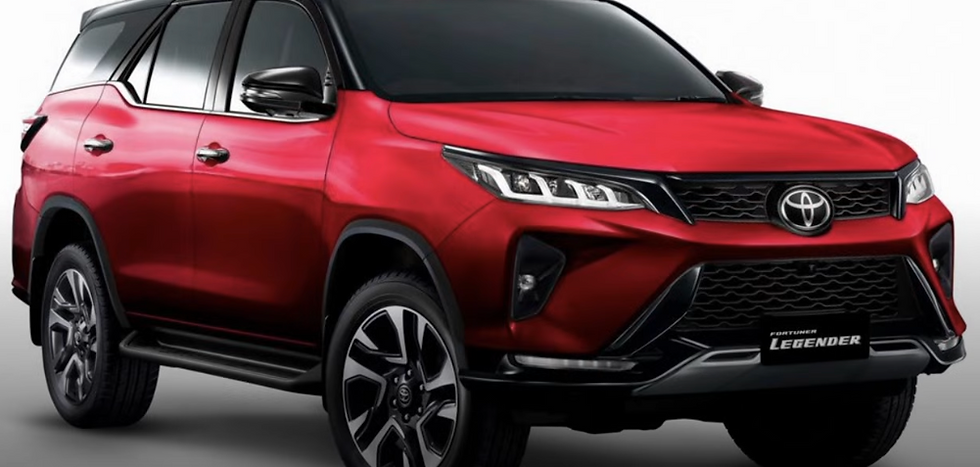
Look at any used car listing for an Innova or a Fortuner, and you will see odometer readings of 1.5 Lakh, 2.5 Lakh, or even 4 Lakh kilometres, yet people still pay top rupee for them without second thoughts.
In Secret of Toyota Quality, I broke down the exact engineering mindset and manufacturing philosophy behind this bulletproof dependability.
Toyota doesn't build cars for showroom sparkle. They engineer vehicles to survive decades of abuse. Here is the real behind-the-scenes engineering that keeps a Toyota ticking when other cars begin to rattle.
1. Conservative Engineering: Understressed Engines
Toyota never rushes into unproven technology just to win brochure wars. While rivals jump quickly onto downsized turbo-petrol engines or finicky dual-clutch transmissions, Toyota waits until tech is thoroughly proven.
They also deliberately understress their engines:
Take the original first-generation Innova: it ran a massive 2.5-litre diesel engine that produced just 102 hp and 200 Nm of torque.
Compared to its competitors of that era like the Scorpio or Safari, that power output looked modest on paper.
Because that large engine was barely stressed to produce modest power, its internal components never faced excessive thermal load. That is why those engines run past 5,00,000 kilometres without needing an overhaul.
2. Kaizen: Continuous Micro-Improvements
Toyota religiously follows the Japanese concept of Kaizen—continuous improvement through relentless micro-adjustments rather than radical, risky overhauls.
If Toyota discovers that a specific bolt or bracket on a 2020 Innova shows surface rust after three years in coastal conditions, they don't wait for a mid-life facelift. By 2021, that exact bolt gets a superior anti-corrosion coating straight from the factory. Year after year, every model quietly irons out weak points, making older platforms practically flawless.
3. Jidoka: Stop the Line for Quality
On a Toyota factory assembly line, every single worker, right down to the newest trainee, has the authority to pull the cord and stop the entire factory line if they spot a manufacturing defect.
In many other automotive plants, halting an active assembly line is seen as a costly offence. At Toyota, the biggest sin is hiding a defect or letting a compromised part roll into customer hands. Quality control happens at every station, not just at the final inspection gate.
4. Over-Engineering for Rough Realities
Toyota designs its mass-market utility vehicles with a 30-year operational mindset in developing nations:
Heavy-Duty Cooling & Suspension: Radiators, alternators, and bush mounts are oversized to take brutal heat, dust, and washboard rural roads.
Strict Supplier Control: Even when third-party vendors manufacture parts for multiple car brands, Toyota's tolerances are notoriously stringent. A supplier cannot even switch rubber seal compounds without explicit approval and re-validation from Toyota engineers.
5. Poka-Yoke: Mistake-Proof Design
Another brilliant Japanese principle at play is Poka-Yoke (foolproofing). Parts are physically shaped so they cannot be assembled incorrectly.
For instance, air filters, connectors, and mounting brackets are keyed with asymmetric tabs. A busy technician servicing your car at the dealership cannot accidentally force a filter upside down even if they tried. The physical design prevents human error during maintenance.
6. Torture Testing Before the Launch
Before any model enters production, prototypes undergo brutal torture testing in extreme global environments—from sub-zero Arctic freezes to scorching 50°C Middle Eastern deserts. They drive components to absolute mechanical failure, analyse the point of breakdown, redesign it stronger, and retest until the weak link disappears.
7. Reliable Function Over Fragile Gimmicks
We all know Toyota interiors can feel dated compared to feature-packed rivals. They stuck with cassette decks when CD changers arrived, kept CD players when USB became standard, and offered simple USB ports while others pushed wireless tech.
Their switchgear relies on chunky, tactile physical buttons instead of fragile touch panels. Every electronic component and switch is chosen for long-term survival, not just for wow-factor on delivery day.
8. Built for Fast, Easy Servicing
Ask any mechanic what car they genuinely enjoy working on, and Toyota ranks right at the top.
Consumable items—oil filters, alternator belts, fluid reservoirs—are positioned for direct, straightforward access without having to dismantle the entire front end. That clean packaging is why Toyota dealerships can turnaround comprehensive periodic maintenance in under two hours, encouraging owners to stick to routine preventative care.
The Bottom Line
When you invest in a Toyota, you aren't paying for the flashiest ambient lighting or giant dashboard screens. You are paying for a proven mechanical fortress that starts on the first crank, keeps repair bills low, and protects your capital with unbeatable resale value years down the road.


Comments