Why Honda’s VTEC Engine Turns Into a Monster After 5,000 RPM

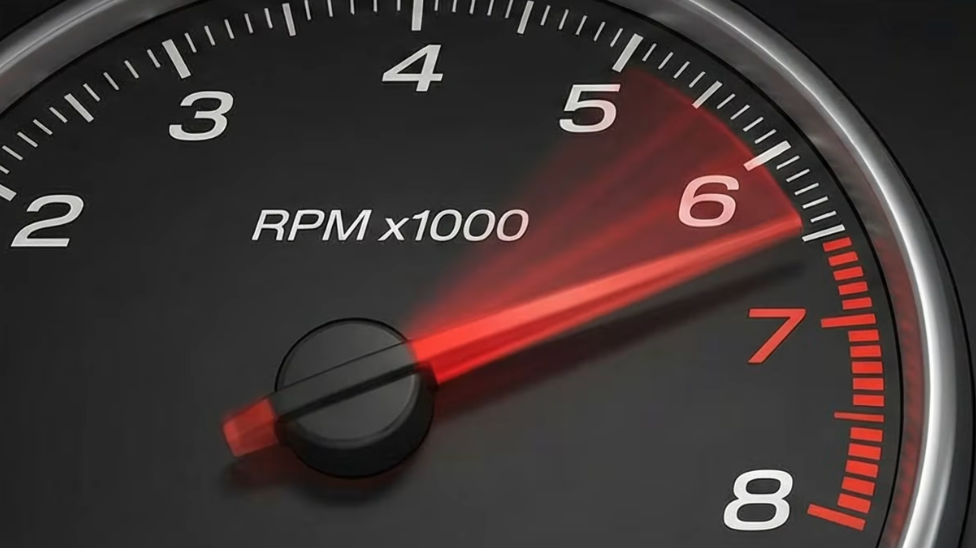
You see a Honda City cruising on the highway, and it looks like a calm, gentle family sedan just humming along silently. But the second you push that throttle past 5,000 RPM, the exhaust note completely transforms into a high-pitched scream.
That sudden surge isn't just noise. That is the legendary "VTEC kicked in, yo!" moment.
Here is the mechanical magic behind Honda’s dual-personality engine, and why car enthusiasts simply refuse to let it go.
1. What Exactly is VTEC? (Without the Heavy Jargon)
VTEC stands for Variable Valve Timing and Lift Electronic Control.
To understand it easily, think about our own breathing:
When you are resting or sleeping, you take slow, shallow breaths. You don’t need a massive rush of air. That’s an engine cruising at low RPM.
When you start sprinting at full speed, your lungs desperately need way more oxygen. That’s an engine revving hard at high RPM.
In conventional engines, the intake valves always open the same way, letting in roughly the same proportion of air no matter how fast you drive.
In a VTEC engine, Honda added an invisible mechanical switch. Once the engine speeds up, the system engages a higher, more aggressive camshaft profile. The valves open wider and stay open longer, gulping in massive gulps of fresh oxygen. That sudden rush of air and fuel is what creates that explosive kick of power.
2. The Racing Obsession Behind the Innovation
Back in the 1980s, Honda’s founder, Soichiro Honda—a pure racing fanatic—wanted two completely opposing things: solid everyday fuel efficiency and genuine track-level performance.
Honda’s engineers took up an impossible challenge: How do we double the horsepower without increasing the engine size?
The breakthrough came when they extracted 160 horsepower from a tiny 1.6-litre naturally aspirated engine. That’s 100 hp per litre—an absolute engineering miracle for street cars back in that era.
3. The Indian Legend: First-Gen Honda City 1.5 VTEC
Fast forward to the late 1990s and early 2000s when Honda brought the City to India.
When they launched that special 1.5 VTEC (Type 2), it essentially became India’s first true budget performance sedan:
Feather-light kerb weight
Low-slung, grounded stance
A free-revving 106 hp engine
Back in the 2000s, anyone who loved fast, spirited driving dreamt of that car. Even today, it remains one of my personal all-time favourites. If you meet any hardcore Indian car enthusiast and ask about their Type 2 City, they will never let it go. If you ever get the chance to drive one, do not miss it.
4. The Dr. Jekyll & Mr. Hyde Personality
The real beauty of VTEC is that it isn't a gas-guzzling race engine all the time:
Between 2,000 and 4,000 RPM: The car is butter-smooth, silent, and easily returns impressive highway mileage. It behaves like the most sensible family commuter you could buy.
Past 5,500 RPM: The aggressive cam lobes engage. The engine pitch sharpens, the rev counter flies towards 7,000 RPM, and the car takes off.
It gives you two completely different cars in one package: an economical daily commuter and a screaming street racer.
5. Japanese Reliability: Built Like a Tank
Normally, high-performance engines come with a catch—they are delicate and break down easily. But Honda engineered VTEC with bulletproof durability.
If you do basic, timely oil changes and routine maintenance, these engines will effortlessly cross 3 to 5 Lakh kilometres without giving you any mechanical headache. That is the genius of Japanese engineering: complex technology on the inside, but absolutely unbreakable on the road.
Over the years, this evolved into i-VTEC (where 'i' stands for Intelligent), incorporating Variable Timing Control (VTC) to continuously optimize valve timing. That meant even better low-end torque, lower emissions, and higher fuel efficiency.
The Final Verdict
Today, the market is full of turbo-petrol engines and instant-torque electric vehicles. They are quick, but nothing quite matches the analogue drama of holding a naturally aspirated Honda VTEC all the way to 7,000 RPM. That pure mechanical soundtrack and high-revving thrill is an emotion you only understand from the driver’s seat.

Comments